University of Michigan Logo

HURON (High-redshift Universe Research and Observation in New Generations)
A Joint Research Group of Dr. Jinyi Yang & Dr. Feige Wang
HURON Group Logo

About

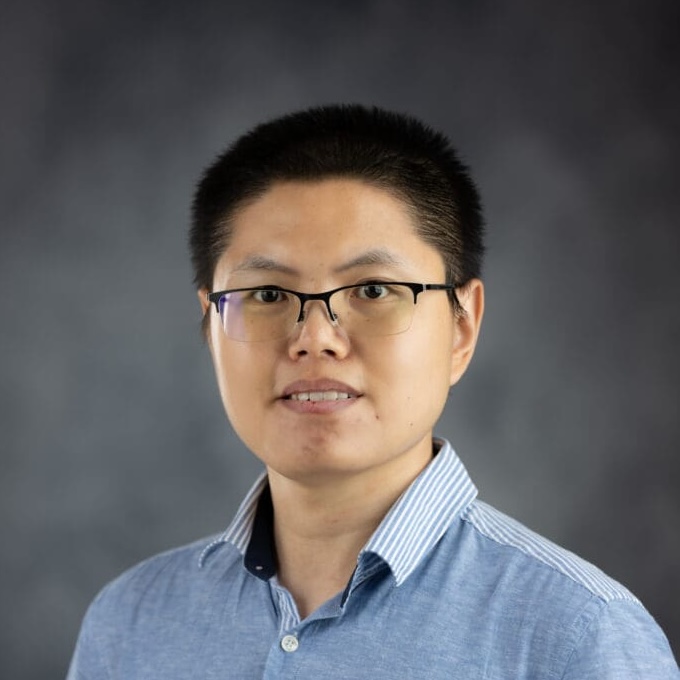
Prof. Yang

Prof. Jinyi Yang

Assistant Professor

Yang's Website
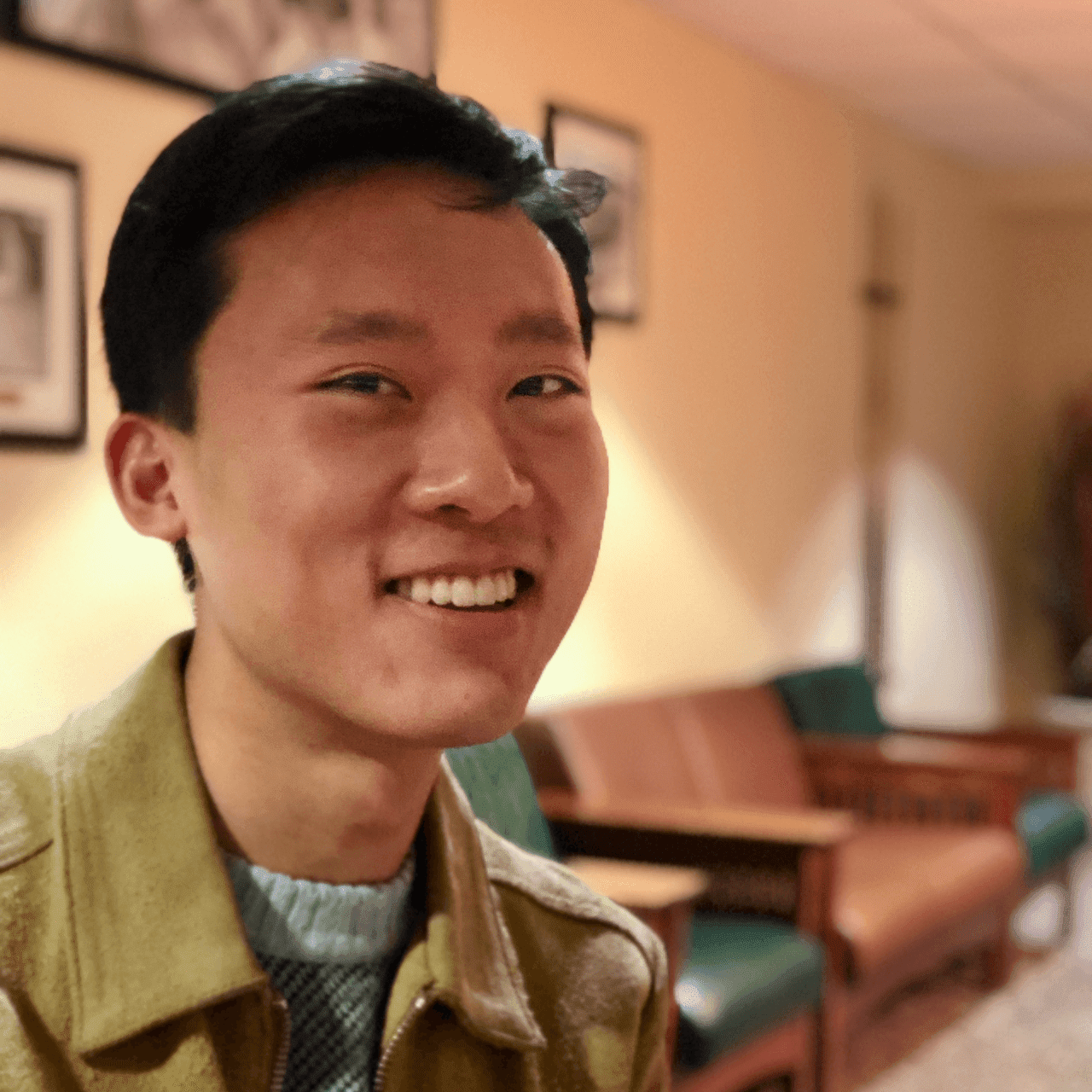
Dr. Wang

Dr. Feige Wang

Assistant Research Scientist

Wang's Website

HURON is a joint research group of Dr. Jinyi Yang & Dr. Feige Wang from the Department of Astronomy, University of Michigan. It brings together expertise in supermassive black holes, galaxies, and cosmic reionization to advance research on the high-redshift universe using the state-of-the-art telescopes, next-generation astronomical surveys, and cutting-edge statistical methods. We foster a collaborative and inclusive environment where all members are respected, supported, and encouraged to share their ideas.

We actively welcome opportunities to work with colleagues both locally and globally, sharing expertise and resources to advance scientific discovery. In addition, we are enthusiastic about hosting visitors, whether for giving talks, seminars, or short-term research visits. Please feel free to reach out if you are interested in visiting us or giving a remote talk.

Team Members

Postdoc Fellows and Graduate Students at UMich

Dr. Kaili Cao

Dr. Kaili Cao

Schmidt AI Fellow

Homepage
Dr. Hyunseop (Joseph) Choi

Dr. Hyunseop (Joseph) Choi

HURON Scholar

Homepage
Olivier Gilbert

Olivier Gilbert

Graduate Student

Homepage
Bingcheng Jin

Bingcheng Jin

Graduate Student

Homepage
Dr. Xiangyu Jin

Dr. Xiangyu Jin

HURON Scholar

Homepage
Zihao Zuo

Zihao Zuo

Graduate Student

Homepage

Undergraduate Research Assistants at UMich

Ashlen Coburn

Ashlen Coburn

Alexander Danielski

Alexander Danielski

Ralf Du

Ralf Du

Elaina Malczewski

Elaina Malczewski

Aven James Sprague

Aven James Sprague

Rosie White

Rosie White

Research

AGNs and Quasars
Active galactic nuclei (AGNs) are regions at the centers of galaxies where supermassive black holes are actively accreting matter, releasing vast amounts of energy across the electromagnetic spectrum. Quasars represent the most luminous class of AGNs, powered by rapidly growing black holes that can outshine their host galaxies. We study all aspects of AGNs and quasars, from their central black holes to their host galaxies, and from the local Universe to the most distant reaches currently accessible.
Black Hole and Galaxy Co-evolution
We are interested in understanding the co-evolution of black holes and galaxies, with a particular focus on the earliest stages of this interplay in the distant universe. Distant quasars provide powerful probes of rapid black hole growth, while recently identified "little red dots" offer a new window into possibly accreting black holes embedded in young galaxies. By studying these populations together, we aim to constrain how black holes grow alongside their host galaxies and how feedback from accretion influences early galaxy evolution.
Cosmic Reionization
Cosmic reionization is the epoch when the first stars and galaxies ionized the neutral hydrogen in the intergalactic medium, transforming the universe from opaque to transparent to light. We are interested in probing the evolving neutral fraction and reionization morphology of the intergalactic medium during the first billion years of cosmic history by using background quasars as powerful lighthouses and connecting quasar Lyman forest measurements with the spatial distribution and properties of galaxies.
High-Redshift Galaxies
High-redshift galaxies offer a unique window into the early universe, tracing the formation of the first stars, galaxies, and large-scale structures only a few hundred million years after the Big Bang. Studying these systems allows us to probe the physical processes that governed early star formation and galaxy assembly. We are particularly interested in searching for and characterizing the earliest galaxies using JWST, whose unprecedented sensitivity enables detailed observations of faint, distant sources at cosmic dawn.
Large Scale Structures and Protoclusters
We aim to find and study protoclusters and the emerging large-scale structures in the early universe, which trace the earliest phases of cosmic web formation. These overdense regions host rapidly evolving galaxies and provide key laboratories for understanding how environment influences galaxy growth, star formation, and black hole activity at early times. By identifying protoclusters and mapping their member populations, we can link small-scale galaxy physics to the buildup of structure on the largest cosmological scales.
Metal Enrichment
We study metal absorption lines in quasar spectra to trace the presence and distribution of heavy elements in the intergalactic and circumgalactic medium in the early Universe. By connecting these metal absorbers to their host galaxies, we can probe how metals were produced, transported, and recycled through galactic outflows over cosmic time. This approach provides key insights into the metal enrichment history of the universe and the feedback processes that shape galaxy evolution.
Data Mining
Our team is interested in mining large astronomical data sets from Euclid, Roman, LSST, and other major surveys. By combining advanced statistical techniques with machine learning methods, we aim to identify the rarest and most extreme objects in the universe such as distant quasars. This data-driven strategy enables new discoveries and provides powerful constraints on galaxy and black hole evolution.
Imaging and Spectroscopic Surveys
Wide-area imaging and spectroscopic surveys are essential for building a comprehensive view of black hole growth, galaxy evolution and large-scale structure formation, enabling statistically powerful studies across cosmic time. These surveys provide the depth and area needed to discover rare objects such as quasars and large-scale galaxy overdensities. We are actively involved in major survey efforts including DESI, Euclid, Roman, and LSST, which together will transform our understanding of the early universe.
Time Domain Astronomy
Multi-epoch infrared observations with JWST, together with upcoming time-domain data from LSST and Roman, are opening a new era in time-domain astronomy. These facilities enable sensitive, wide-field, and repeated observations across a broad range of wavelengths, allowing us to probe variability and transient phenomena deep into the early universe. Our group is particularly interested in using these data to search for explosions from Population III stars and to study AGN variability, providing new insights into the first generations of stars and the growth of supermassive black holes.

Featured Visitors

Upcoming Visitors

Dr. John Weaver Upcoming
MIT
Monsters in the Dark: Euclid and the discovery of the most luminous galaxies at cosmic dawn
Nov. 3, 2026 - Nov. 5, 2026

List of Previous Visitors

Events

HURON Group Discussion Schedule

We meet every Friday to chat about the latest results from arXiv, our own research projects, or to hear from our featured visitors. These interactions provide valuable opportunities for exchanging ideas, building collaborations, and engaging with our research community.

2026 EREBUS Coallaboration Meeting @ Ann Arbor

The 2026 EREBUS Collaboration Meeting aims to facilitate in-depth discussions of the scientific exploitation of ongoing JWST programs led by the EREBUS team, and to plan future large-scale initiatives with JWST, Euclid, Rubin, and Roman. With the start of Euclid and Rubin science operations, and the forthcoming launch of Roman, we are entering a transformative period that offers unprecedented opportunities to expand our understanding of the early Universe. The meeting will include dedicated sessions focused on how the collaboration can continue to lead studies of high-redshift quasars, AGNs, and galaxies in the data intensive era, while strategically preparing for synergies with the next generation of extremely large telescopes. Check our website for more information.

Opportunities

Postdoctoral Scholar Candidates
If you are considering UMich as a host institution for a prize postdoctoral fellowship (e.g., NHFP, Brinson, Vera C. Rubin Astronomy Frontiers Fellowship, ELT), you are welcome to reach out to discuss the resources we could provide to support your research and how we might collaborate on potential projects. We also have open HURON postdoctoral scholar positions this year.
Data Science & AI Fellow Candidates
If you are seeking a postdoc position and want to apply data science, machine learning, and/or AI techniques to your astronomical research, the MIDAS Institute at UMich offers several excellent fellowship programs. Please feel free to contact us to discuss the potential of hosting you, as science mentors, in the astronomy department.
Prospective Graduate Students
If you are considering applying to the astronomy PhD program at UMich, please feel free to reach out with research-related questions. However, please note that emailing us will not affect your chances of admission.
UMich Undergraduates
If you are an undergraduate in a STEM major at UMich, you are welcome to reach out to ask about research opportunities.

Contact

For inquiries, please contact Dr. Wang or Prof. Yang via their UMich emails (i.e., 'at' umich.edu).
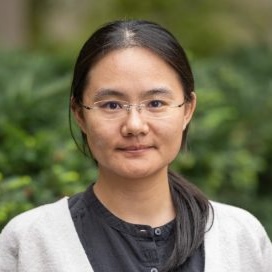
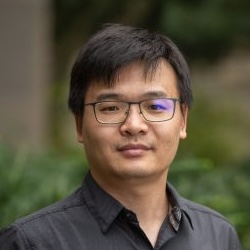
Dr. Feige Wang
fgwang
Prof. Jinyi Yang
jyyangas